When a football outing changes: a local organiser’s checklist
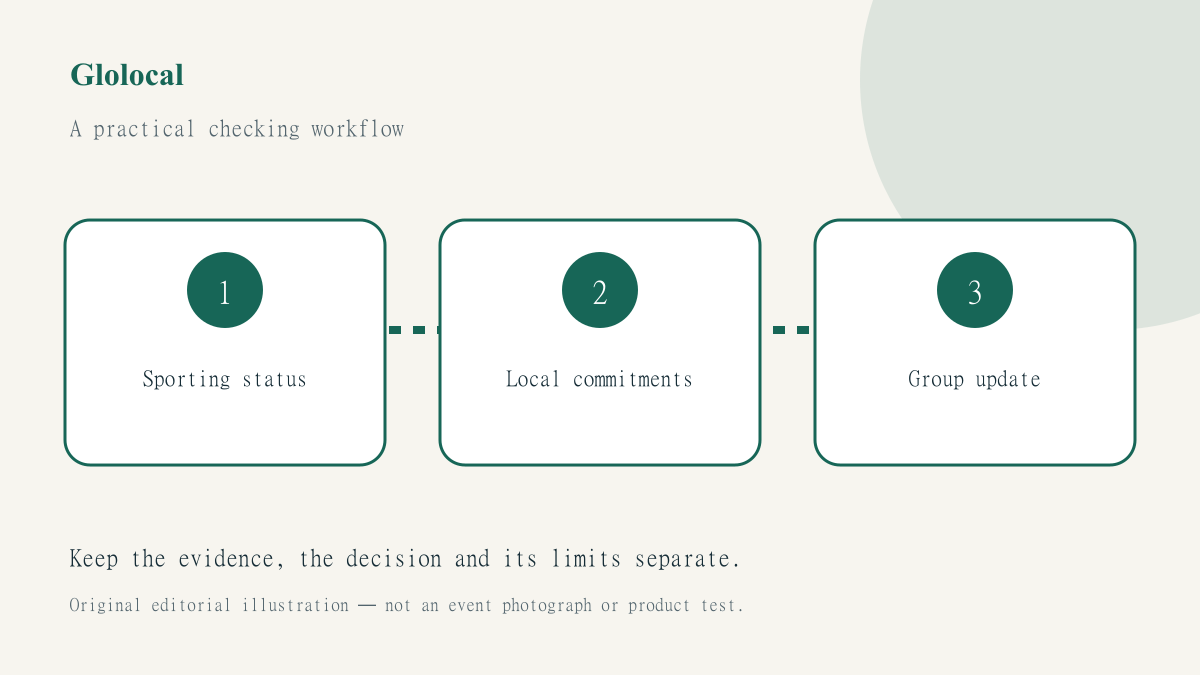
A local football outing is more than the fixture on a calendar. Someone has chosen a meeting point, several people may have arranged transport and a venue may be expecting a group. When the match changes, those arrangements do not all change automatically. A useful organiser separates the sporting announcement from the decisions the group still needs to make.
The guide to postponed and abandoned matches is the starting reference. This Glolocal edition applies that distinction to a hypothetical community outing, not to a current event. It makes no claim about ticket refunds, venue cancellation rights or a replacement date; those questions must be checked with the responsible providers.
Identify which part of the plan changed
Write down the exact announcement and where it came from. Does it concern the match, the venue opening, a screening arrangement or the group’s own meeting? A message that the sporting event is postponed does not prove that the café, club or booked room will close. Equally, a venue’s decision not to screen a match is not evidence that the fixture itself has been cancelled.
Use the fixtures and results listing to identify the event, then follow the competition, club or organiser’s current notice where a decision matters. Keep the source link and the check time in the group plan. A screenshot without its original page can be useful as a lead, but should not become the only record behind the instruction people receive.
Give one person responsibility for the update
A busy group can generate several contradictory replacement plans in minutes. Choose one organiser to maintain the main note, while other members provide specific information such as a venue response or a transport provider’s current terms. This is a proposed coordination method, not permission to alter somebody else’s booking or calendar without their agreement.
The update should identify the original event, describe what is confirmed and list what remains undecided. Avoid replacing the whole message with cancelled, because someone joining the conversation later may not know whether the match, the meeting or the room booking is affected. Clear scope is more important than sounding decisive before the necessary checks are complete.
Check each related commitment separately
Make a small list of commitments: venue reservation, travel, accessibility arrangements and any money collected by the group. Record the provider or responsible person beside each one. A sporting announcement should prompt those checks, not a blanket promise that every cost will be refunded. Keep actual provider decisions separate from suggestions made by group members.
If the group considers meeting anyway, describe the alternative honestly. A general social gathering is not a confirmed screening of the rearranged match. Revisit the broadcaster-by-country checks before carrying forward an old viewing claim. A new event time, a selected programme and a venue’s own arrangements need their own evidence.
Keep a flexible replacement proposal
Offer a small number of practical choices rather than an invented confirmed plan. The group might wait for a replacement date, keep an ordinary social meeting or cancel the outing after reviewing provider conditions. State who needs to decide and when the next update is expected. Do not create a false deadline simply to stop the discussion.
For people travelling or using a different time zone, put the full intended local date in the proposal. A bare hour or a casual reference to tonight can become misleading when copied later. Keep arrival time separate from any sporting start, and confirm the venue contact if the revised proposal changes what the venue is expected to provide.
Retire the obsolete instructions
Update the controlled group note, booking page or event listing through its normal authorised workflow. Mark old announcements as superseded where removal would erase useful context. Check pinned messages and scheduled reminders so that an obsolete meeting instruction does not reappear after a correct update has been sent. Other people’s private copies may remain, which is why one stable current record is valuable.
Explore alternative fixtures on SportsFixtures, but keep the group’s decisions on its own maintained page. Our checking and corrections approach uses the same discipline: identify the claim, preserve the source and verify the visible change. A well-managed update leaves people knowing what to do next, without pretending that every uncertainty has already been resolved.