Discuss VPN recommendations responsibly in community groups
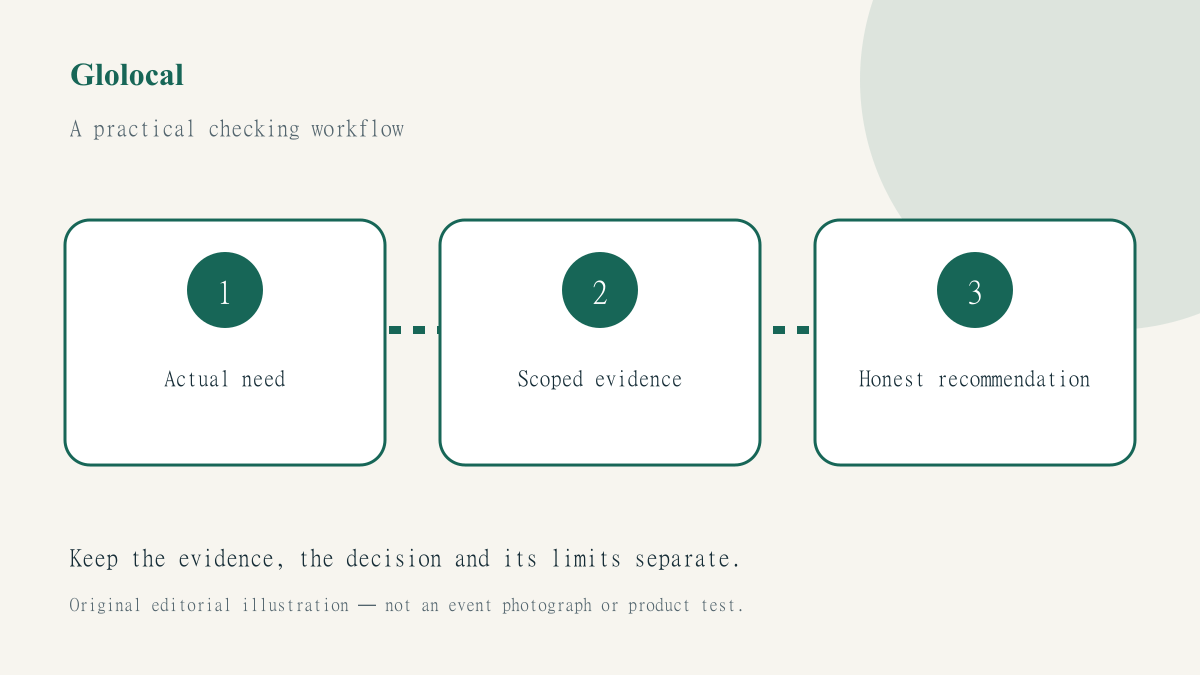
Community groups often exchange digital recommendations with the same generosity as restaurant suggestions. That can be useful, but a statement such as this VPN makes everything private is not a complete description of a tool or a person’s needs. Before turning a neighbour’s experience into public advice, identify the actual problem and the limits of the evidence being shared.
The guide to VPN capabilities and limits offers a useful starting boundary. This article concerns how a group discusses recommendations responsibly. It is not a comparison ranking, a hands-on product test or a claim that a particular service is suitable for every member.
Ask what the recommendation is meant to solve
A traveller seeking a protected network path, a worker following employer access rules and a person investigating an account problem may need different help. Start with the task rather than the product name. A shared label such as privacy can conceal very different expectations about websites, accounts, devices and the information a person chooses to disclose.
Encourage people to describe observations precisely. An application reporting connected is not the same as a person proving that every background request followed the intended route. A service working once on one device does not establish all supported platforms or future behaviour. Keep personal experience useful by stating its scope rather than converting it into a universal guarantee.
Separate product facts from group opinion
For an actual product feature, consult the provider’s current documentation for the relevant version and platform. For a person’s experience, identify what they actually used and when. For an opinion, label it as such. A recommendation can contain all three, but a reader should be able to distinguish them without inferring which statement the group has independently checked.
People exploring JungleVPN should use its current information rather than a screenshot or offer copied from an old conversation. Do not collect members’ passwords or access codes to demonstrate that a service works. An ordinary community discussion does not create authority to manage someone else’s account or install software on their device.
Keep network preparation in the discussion
A product recommendation should not erase the basic steps in the public Wi-Fi routine. Verify the venue’s genuine network, follow its legitimate sign-in process and check the website you intend to visit. A VPN does not make a lookalike login page trustworthy or excuse bypassing a certificate warning.
Where a member is doing sensitive work, direct them to their organisation’s approved access instructions rather than substituting a personal tool because another member likes it. The group can help locate documentation without pretending to make the employer’s security decision. A well-bounded recommendation respects those different responsibilities.
Respond to problems without unsafe improvisation
If a connection fails, use a structured route such as the VPN troubleshooting checklist. First describe whether the underlying internet connection works, then record the specific application state or error. Do not ask someone to change several protections at once and then call the result a fix because one page eventually loads.
Keep support information proportionate. A device platform, approximate time and relevant error may be useful; identity documents, full private messages and unrelated account screens usually add unnecessary exposure. Use the provider’s genuine support route for issues beyond the group’s competence. A helpful answer sometimes consists of a clear referral rather than another improvised setting.
Publish recommendations with an honest status
Give each maintained recommendation a review trigger, such as a changed product release, an unavailable documentation link or a substantiated correction. That is more useful than refreshing a date automatically. If the group no longer has evidence for a claim, narrow or withdraw that claim instead of leaving it online as a permanent endorsement.
If the group maintains a public resource page, identify who reviews it and when a material recommendation was checked. Distinguish a provider information link from an endorsement, a user account of experience from a comparative test and an owned-network reference from independent editorial coverage. Do not invent ratings, partnerships or performance measurements to make the page seem more authoritative.
Our editorial and corrections policy applies the same rule to these guides: explain what the evidence supports and retain uncertainty where necessary. Responsible local recommendations help people ask better questions and find genuine information. They do not promise anonymity, universal access or risk-free browsing simply because a familiar person suggested an app.